
March 27, 2026 The judges have made their decisions! Congratulations to the winners of the MDDC Press Association 2025 Contest. These winners represent the best work of the region in editorial, revenue and design categories. Over 1600 entries were submitted in over 80 categories. We will announce the winners for first and second place in our awards broadcast (premiered through Zoom) throughout the week of May 4th. Best of Show winners (one per category) will be announced at our Annual Conference on May 8th in Annapolis. MDDC will hold its annual conference and awards lunch on Friday May 8th from 9 am – 2:30 pm at the Doubletree Annapolis hotel. Join colleagues and industry experts for two sets of panels and discussions on topics of interest, speed networking in our new “Mixing Bowl” session, and the presentation of Best of Show awards during a festive Mexican buffet lunch. Register for the conference here. (First and second place awards will be announced in our pre-conference video drops during the week of May 4th.) Are you an award winner? Help us showcase your work by making sure we have your latest headshot, correct title and spelling of your name, and social handles. This information will also be used in our new directory we are releasing this year. Click here to complete the form . Division A The Baltimore Banner Stokely Baksh Sapna Bansil Giacomo Bologna Liz Bowie Jessica Calefati Meredith Cohn Céilí Doyle Events Staff Ashanti Fortson Jessica Gallagher Kristen Griffith Rick Hutzell Jerry Jackson Sahana Jayaraman KT Kanazawich Barney Kirby Andy Kostka Wesley Lapointe Ryan Little Paul Mancano Alex Mann Hallie Miller Greg Morton Ulysses Muñoz Kaitlin Newman Glenford Nunez Emily Opilo Tim Prudente Lillian Reed Anna Rubenstein Lee O. Sanderlin Dylan Segelbaum Krishna Sharma Staff Leslie Gray Streeter Jasmine Vaugh-Hall Allan James Vestal Sarah Walton John-John Williams IV Adam Willis Ariel Zambelich Alissa Zhu The Baltimore Sun Jeff Barker Dan Belson Ruben Castaneda Karl Merton Ferron Lloyd Fox Karl Hille Ela Jalil Todd Karpovich Andy Knobel Kenneth K. Lam Jean Marbella Mary Carole McCauley Lorraine Mirabella Abigail Olear Jonathan M. Pitts Chevall Pryce Tracie Rawson Kevin Richardson Staff Armstrong Williams Katharine Wilson The News Journal Shane Brennan Benjamin Chambers Delaware Online/The News Journal staff Martin Frank Ginger Garrison Krys'tal Griffin Brandon Holveck Stephanie Lindholm Esteban Parra Peter Pietrangelo Kelly Powers Staff Luis Solano Patricia Talorico Také Uda Xerxes Wilson Division B Cape Gazette Kevin Conlon Dan Cook Chris Flood Ron MacArthur Mallery Galaska Ellen McIntyre Aaron R. Mushrush Jim Parterson Nick Roth Bill Shull Abby Workman Cumberland Times Steve Bittner Cumberland Times-News Staff Mark Harris Chip Minemyer John Smith Times-News Staff The Daily Record Patrick Brannan Sloane Brown Kay Kron MBRT Staff Kate Malone Staff The Frederick News-Post Cameron Adams Erik Anderson Marwa Barakat Samantha Bangh James Constantine Graham Cullen Cliff Cumber Alexander Dacy Ric Dugan Esther Frances Rocco Geppi Noelle Hallman Brittney Hamilton Connie Hastings Ceoli Jacoby Erin Jones Anna Joyce Lauren LaRocca Gabrielle Lewis Kate McDermott Shelby Maly Ryan Marshall Jack Murphy Joseph Peterson James Rada Jr. Andrew Schotz Staff Greg Swatek Nolan Wilkinson Geordie Wilson Susan Writer Katina Zentz The Herald-Mail Julie E. Greene Daniel Kauffman Washington Business Journal Nate Doughty Ben Peters Daniel J. Sernovitz Division C Baltimore Fishbowl Nicole Allen Jack Barker Eddy Calkins Marcus Dieterle Charlie Dunn Len Foxwell Ed Gunts Charlie Herrick Maggie Jones Julie Kichline Karuga Koinange Matt McCarney Nathan McConarty Joe Mesa Karen Nitkin Dan Rodricks Staff Aliza Worthington Capital-Gazette (The Annapolis) Katherine Fominykh Michael Howes Anthony Maluso Benjamin Rothstein Eric Smith Maggie Trovato Katharine Wilson Carroll County Times Jeffrey F. Bill Lily Carey Brian Krista Anthony Maluso April Santana Catholic Review Christopher Gunty George Matysek Jr. Gabriella Ferraro O’Brien Kevin J. Parks Staff Daily State News Jamie Bobbitt Jessica Cook Gary Emeigh Mike Finney Angi Hicks Beth Skinner Andy Walter Andrew West Daily Times Olivia Minzola Lauren Roberts Maryland Matters Danielle J. Brown Christine Condon William J. Ford Josh Kurtz Bryan P. Sears Division D Baltimore Beat Devin Allen Jocelyn Dombroski MacKenzie River Foy Grace Hebron Logan Hullinger Eze Jackson Sanya Kamidi Jonathan Keen Fabian Perez Bry Reed E. Brady Robinson Faith Spicer Staff Christian Thomas Baltimore Jewish Times Ebony Brown Braden Hamelin Lonna Koblick Bay Journal Karl Blankenship Jeremy Cox Lauren Hines-Acosta Whitney Pipkin Tim Sayles Staff Timothy B. Wheeler Bethesda Today Ashlyn Campbell Elia Griffin Louis Peck Max Schaeffer Cecil Whig Jane Bellmyer Carl Hamilton Patrick LaPorte Southern Maryland News Riley Dauber Megan Johnson Marty Madden Spotlight Delaware Karl Baker Tim Carlin Editorial Staff Brianna Hill Elsa Kegelman Julia Merola Jacob Owens José Ignacio Castañeda Perez Maggie Reynolds Mike Smith Nick Stonesifer David Stradley Staff Angela Reives The Star Democrat Ahmad Garnett Biff Haufe Konner Metz Meredith Moore Jennifer Quinn Eli Wohlenhaus Lily Tierney Eli Wohlenhaus Townson Times Craig Clary Washington Jewish Week Zoe Bell Aaron Troodler Frank Wagner Division E Baltimore Brew Christian Arias Jennifer Bishop Dante Davidson-Swinton Amy Davis Becky Kling Feldman Madelein O’Neill Keondra Prier Mark Reutter Dan Rodricks Fern Shen Carson Ward Business Monthly George Berkheimer Mark R. Smith Pantea Tofangchi Catherine White Jason Whong Caroline Review Connie Connolly Kennedy Thomason Coastal Point Chris Aube Susan Canfora Taryn King Shaun M. Lambert Karin Magill Darin McCann Staff Mike Stern Jillian Stohr Cian Titus Laura Walter OC Today -Dispatch Marc Emond Tara Fisher Brian Shane Washington Informer (The) Denise Rolark Barnes Elizabeth Booker K Golden Jada Ingleton Ja’Mon Jackson Ra-Jah Kelly Skylar Nelson Dan Olds DeMarco Rush Staff Washington Informer Team Division F Aegis Matt Hubbard Brian Krista Taylor Lyons Brendan Nordstrom Afro-American (The) AFRO Editorial Staff Dr. Frances Murphy (Toni) Draper Ashleigh Fields Diane Hocker Lenora Howze Matthew McDonald Tashi McQueen Victoria Mejicanos Dana Peck Kevin Peck Megan Sayles Alexis Taylor Chrissy Thornton Baltimore Business Journal Baltimore Business Journal Staff Garrett Dvorkin Matt Hooke Joe Ilardi Alex Mason Jacqueline Prins Melody Simmons Morgan Simpson Bay Times /Record Observer Hannah Combs Andrea Grabenstein Capital News Service Jack Bowman CNS-TV News Staff Eddy Calkins Capital News Service Sophia da Silva Lillian Glaros Adam Hudacek Molecule Jongwilai Andrew McBride Rachel McCrea Cat Murphy Haley Parsley Peter Riccio Ruby Siefken Staff Tolu Talabi The Howard Center for Investigative Journalism Jade Tran Emma Tufo Zion Willians Ben Wolf Delaware Business Times Jennifer Antonik Katie Tabeling Howard County Times Jeffrey F. Bill Kiersten Hacker April Santana Molly Fellin Spence Jacob Steinberg Kent County News Will Bontrager Hannah Combs Laurel Star / Seaford Star Chris Elliott Tede Griffith Carol Kinsley Mike McClure Brittany Passon Lynn Schofer Star, Georgetown Chamber of Commerce Star Staff Carson Williamson Independent Journalists Mark Hyman Madeline O’Neill Suzanne Pollak
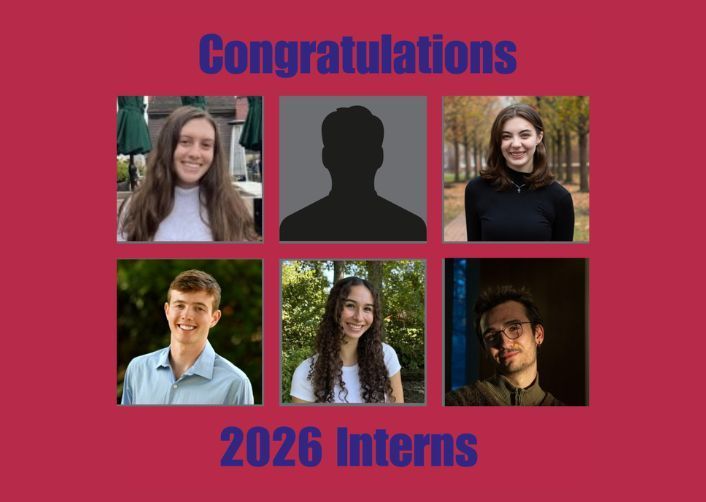
Six journalism students have been selected as newsroom interns for the summer of 2026 through MDDC’s Reese Cleghorn Internship program. Funding for these internships was made possible the Delaplaine Foundation, the Goldseker Foundation and The Nutting Family Foundation, Baltimore Fishbowl, Baltimore Brew, and many individual donors to MDDC The interns were selected from a pool of highly qualified applicants. The intern selection committee, comprised of Andrea McDaniels of The Baltimore Banner, Ann LoLordo, Diana Sugg freelance journalist, Molly Fellin Spence of The Baltimore Sun, Kamau High of The Capital Gazette, Sam Davis of the Baltimore Sun and Tom Ferraro reviewed more than thirty initial applications, which included a personal essay, published clips and educational and professional references. The committee narrowed the field and conducted a panel interview with each candidate. Each intern will be treated as a professional working journalist at his or her host newsroom, with the expectation of generating 35-40 published clips and real-world experience during their 8-week paid internship. As part of the program, interns participate in a one-day briefing on how to get the most out of the internship. MDDC will also hold its popular “Into the Newsroom” series, which brings together reporters, freelancers and interns from MDDC member organizations for skill building training sessions. Interns will also be partnered with mentors, who will offer guidance outside the newsroom and coaches who will focus on writing skills. The interns are (in alphabetical order): Marijke Friedman University of Maryland; Andrew Hall , Morgan State University; Evelyn Lucado , Washington College; Oliver Mack , University of Maryland; Nicole Pilsbury, University of Maryland; Theodore Rose , University of Maryland.
We are featuring amazing examples of investigative journalism by our news media members that demonstrate the ideals of Sunshine Week in action! Sunshine Week is a nonpartisan collaboration among groups in the journalism, civic, education, government and private sectors that shines a light on the importance of public records and open government. This year’s efforts are coordinated by Joseph L. Brechner Freedom of Information Project at the University of Florida’s College of Journalism and Communications. And supported by John S. and James L. Knight Foundation and thrive with a growing list of partners. Sunshine Week is about the public’s right to know what its government is doing, and why. Recent investigative and transparency reporting from MDDC members During Sunshine Week, MDDC will feature important investigative pieces that show the power of local reporting and transparency in our communities. Please tag your own work with #SunshineWeek2026 to be part of the conversation. Josh Investigates – Josh Shannon – Newark Post (The) Inmates share medical records to prove alleged BCDC H.pylori outbreak – Alexis Taylor- Afro American (The) The housing hustle igniting a foreclosure crisis in Baltimore – Hallie Mikker, Giacomo Bologna, Shahanna Jayaraman – Baltimore Banner (The) Thousands say they were sexually abused in Maryland juvenile detention centers. – Madeleine O’Neill – Baltimore Beat Maryland’s public employee union quietly loses $1 million in “phishing scam” – Mark Reutter – Baltimore Brew Health care’s heavyweight showdown – Matt Hooke, Craig M. Douglas – Baltimore Business Journal Rehoboth using AI to track license plates, Rehoboth issues AI camera report, etc. – Chris Flood – Cape Gazette Off the Rails – The Howard Center for Investigative Journalism – Capital News Service ‘Ticking time bombs’ – Coal ash pits pepper the Bay watershed – Timothy B. Wheeler, Whitney Pipkin – Bay Journal He admitted ‘filthy’ chats with a teen. Cumberland made him police chief . – Madeleine O’Neill Federal filing by ‘shadowy’ group trolling Moore leaves questions unanswered – Bryan P. Sears – Maryland Matters Toddler tram death linked to equipment problems, probe finds – Bethany Hooper – OC Today-Dispatch https://spotlightdelaware.org/2025/06/12/wilmington-lobbied-biden-camp-to-bring-presidential-library-to-the-city/ – Brianna Hill, Karl Barker – Spotlight Delaware Visit Harford nonprofit reportedly spent thousands on parties, gifts, alcohol – Matt Hubbard – Aegis Intentional hole cut in Fort Detrick lab suit – Ceoli Jacoby, Marwa Baraka – Frederick News-Post (The) Hundreds of Delaware teachers found working on expired licenses – Kelly Powers, Esteban Parra – News Journal (The)
This Thursday is the ninth annual Student Press Freedom Day , a national moment to amplify student journalists in your community and to stand up for their free press rights. Amid escalating censorship, intimidation and legal threats, student journalists are rising to the occasion. Across the country, they’ll be educating their peers about press freedom through op-eds, on-campus events and more. Here are some ways you can stand with them: 1) Share on social media: Tell your followers why student journalism is so important to democracy. And if you were a student journalist, share what it meant to you! Be sure to use #StudentPressFreedom, and you’re welcome to tag the Student Press Law Center. 2) Report on local student journalists: Whether it’s a news story about what they’re doing for Student Press Freedom Day or a feature story on their challenges and successes, this is an opportunity to spotlight the essential work they’re doing at high schools and/or colleges near you. Here are seven things to know to aid your reporting. 3) Write an editorial or column: Explain to your audience why it is important to protect and support student voices through journalism, and to train the next generation of truth tellers. This toolkit has some ideas to help. 4) Republish this free-to-use story: The Student Press Law Center and other organizations have partnered to launch the Student Press Report, an editorially independent news desk to cover college journalism. Out this week, the first story is an in-depth look at the state of college journalism . You are welcome to republish this story and photos with credit ( details here ). Of course, you can take these steps to amplify student journalism any time of the year! The Student Press Law Center , which organizes the Day each year, is the nation’s only legal organization devoted to defending and advancing the free press rights of student journalists. If SPLC can be helpful this week or any time, please don’t hesitate to reach out to Josh Moore at jmoore@splc.org .
The Maryland–Delaware–District of Columbia Press Association (MDDC) represents local news organizations serving communities across our region. Our members rely on clear and consistent access to public information to inform residents about how government operates and how public resources are used. We are concerned by recent actions affecting the ability of local Inspectors General to obtain unredacted government records necessary to perform their duties. While this issue has emerged in Baltimore City and Montgomery County, the implications extend beyond any one jurisdiction. Inspectors General are established by local law to identify fraud, waste, abuse, and misconduct in government operations. Access to financial records, personnel records, and other internal documentation is central to that responsibility. When access is restricted or delayed, the oversight process itself is weakened. This is not simply an internal dispute between agencies and oversight offices. It directly affects the public’s ability to understand how government functions and how taxpayer dollars are spent. Inspector General investigations frequently surface information that would not otherwise come to light. Their reports provide residents, elected officials, and the news media with independent insight into government operations. It is important to recognize that Inspectors General operate within clear confidentiality boundaries. They are legally obligated to protect sensitive information and do not publicly disclose personnel files, medical information, or confidential financial data. Public reports describe findings and systemic issues without naming individuals, vendors, or contractors under scrutiny. The process is designed to balance oversight with discretion. If Inspectors General are denied access to the records necessary to determine whether there is cause to investigate a complaint, that balance is disrupted. Oversight cannot function effectively without access, and transparency is diminished as a result. Maryland’s Public Information Act was enacted to promote transparency and accountability. Clarifying the law to ensure that Inspectors General retain appropriate access to government records—while maintaining existing confidentiality protections—would reinforce that purpose. We urge the General Assembly to address this issue promptly and ensure that local Inspectors General can carry out their legally mandated responsibilities. Strong oversight supports effective governance, strengthens public confidence, and upholds the public’s right to know. We believe a strong news media is central to a strong and open society.

The relationship between public relations and local news has always required care, trust, and clarity. In 2026, that relationship matters more than ever. Local newsrooms are operating with fewer resources, tighter timelines, and growing responsibility to the communities they serve. At the same time, PR professionals are navigating a crowded information environment where visibility is harder to earn and credibility is easier to lose. Episode 153 of Five Dubs , the MDDC Press Association podcast, brought those realities into focus. In a wide-ranging conversation with editors from Baltimore Fishbowl , The Daily Record , and The Afro , one message came through clearly: strong PR–media relationships are built on understanding how local news actually works today—not how we wish it worked. Here’s what PR professionals should know heading into 2026. Local News Has Less Time — Not Lower Standards Shrinking newsrooms are not a new story. But the implications are often misunderstood. Editors and reporters are covering more beats with fewer people. That means there is less time for follow-ups, rewrites, and clarification. What it does not mean is that standards have changed. Verification still matters. Relevance still matters. Accuracy still matters. For PR professionals, this means: Lead with the most important facts, clearly and early Explain why the information matters to a specific audience Make sourcing transparent and easy to verify A clear, well-focused pitch respects a newsroom’s time and increases the chance that a story will be considered on its merits. One Media Landscape, Many Missions One of the strongest takeaways from Episode 153 is that “local media” is not a single thing. Each outlet represented serves a distinct audience: Baltimore Fishbowl balances lifestyle and hard news for a growing regional readership The Daily Record focuses on business, legal, and government coverage statewide The Afro centers Black communities, with deep reporting on culture, policy, faith, and local impact The same announcement may be relevant to all three—but not for the same reason. Effective PR in 2026 means shaping pitches to fit the outlet’s mission, audience, and coverage priorities. Generic outreach is easy to spot and easy to dismiss. Thoughtful framing signals respect and preparation. Relationships Matter More Than Distribution Mass distribution tools are everywhere. Trusted relationships are not. Editors emphasized that familiarity and reliability make a difference. Knowing what an outlet covers, understanding who handles which beats, and offering useful information—before you need coverage—builds credibility over time. PR professionals who act as informed colleagues rather than transactional messengers are more likely to be remembered when a relevant story breaks. This is not about exclusivity. It’s about consistency, accuracy, and mutual respect. AI Is in the Workflow — Judgment Is Not Artificial intelligence is already part of newsroom operations, supporting tasks like transcription, research, and workflow efficiency. But editorial judgment remains human. Editors are still responsible for deciding: Which stories serve their communities Which sources are credible How information is framed and contextualized AI-generated pitches that sound polished but lack substance are easy to spot. What stands out instead is real expertise, local knowledge, and accountability. In 2026, trust is still built person to person—even when tools are involved. Embargoes and Timing Matter One practical point that resonated across the panel: timing can make or break a story . Embargoed information, when used appropriately, helps small newsrooms plan coverage and prepare thoughtful reporting. Last-minute requests—especially for non-breaking stories—are harder to accommodate. On the flip side, reporters often operate on tight deadlines when news is breaking. Understanding that pressure works both ways strengthens collaboration. Good PR anticipates newsroom realities rather than reacting to them. Not Every Story Is Daily News — And That’s Okay A recurring theme was the importance of matching stories to the right format. Not every announcement is suited for daily editorial coverage. That doesn’t mean it lacks value. Editors discussed multiple paths for visibility: Feature stories tied to broader trends Special sections and editorial calendars Honorifics and recognition programs Sponsored content when appropriate Understanding these options—and being open to them—helps organizations reach audiences without forcing a story into the wrong frame. Community Voices Are Still Underrepresented Across outlets, editors agreed: the most underreported voices are often the people most affected by policies and programs. Announcements about funding, initiatives, or leadership changes are stronger when paired with: Voices from the community People doing the day-to-day work Individuals directly impacted PR professionals can play a critical role by helping newsrooms connect with those voices—not just institutional spokespeople. This approach doesn’t dilute a message. It strengthens it. Underreported Stories Still Need Help Surfacing Editors also pointed to gaps in coverage that PR can help address: Local economic development beyond major institutions Emerging industries and small business ecosystems Regional stories outside major population centers New and diverse expert voices Surfacing these stories requires context, patience, and an understanding of how they fit into a newsroom’s existing coverage. What This Means for PR in 2026 The future of PR and local news is not adversarial. It is interdependent. Strong earned media outcomes come from: Clear, fact-based communication Respect for editorial independence Alignment with audience needs Long-term relationship building In a fragmented media environment, credibility remains the most valuable currency. Local news organizations are not just content distributors. They are community institutions. PR professionals who understand that—and work within it—will be better positioned to tell meaningful stories in 2026 and beyond.
January 13, 2026 The 2026 MDDC Annual Conference returns to Annapolis on May 8, 2026, uniting hundreds of journalists, advertisers, and decision-makers from across the region. Explore sponsorship packages to elevate your brand and champion a strong, independent press.
January 14, 2026 – The MDDC Press Association strongly condemns the FBI’s search of the home of Washington Post reporter Hannah Natanson—an extraordinary and deeply troubling action that threatens press freedom and the public’s right to know. Searches of journalists’ homes are exceedingly rare for good reason. While government investigations into unauthorized disclosures are not uncommon, Natanson is neither accused of a crime nor identified as a target of the FBI’s investigation. Federal and state laws, along with long-standing Department of Justice policies, are explicitly designed to protect journalists and their sources from precisely this kind of intrusion. This action represents yet another step in a sustained erosion of press freedoms—one that fosters fear, intimidation, and harassment of journalists whose role is to inform the public and hold power to account. It bears repeating: in the United States, it is not a crime for journalists to obtain or publish classified information. As Bruce D. Brown, president of the Reporters Committee for Freedom of the Press, aptly stated, the search of Natanson’s home constitutes “a tremendous escalation in the administration’s intrusions into the independence of the press.” Washington Post Executive Editor Matt Murray rightly characterized the search as an “extraordinary, aggressive action,” reaffirming the institution’s “long history of zealous support for robust press freedoms” and its unwavering commitment to that work. The implications of this raid extend far beyond a single reporter or newsroom. When law enforcement crosses this line, it sends a chilling message to journalists everywhere and undermines the constitutional protections that safeguard a free and independent press. Such actions ultimately harm the public interest by discouraging investigative reporting and weakening transparency in government. The MDDC Press Association calls on federal authorities to respect both the letter and the spirit of press freedom protections and to reaffirm their commitment to the First Amendment. A free press is not an obstacle to democracy—it is essential to its survival. MDDC champions local news media organizations and advocates for press freedom. We stand with journalists and advocate for freedom of the press, ethical standards, and the rights of media professionals to do their work without fear, harassment or violence.

The Center for Integrity in News Reporting is now accepting entries for its annual journalism awards recognizing objective and impartial reporting published in 2025. The program includes six $25,000 cash prizes—now featuring a new Investigative Reporting category—and there are no entry fees. Journalists and editors may submit work directly.
